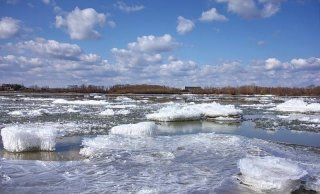
RSE Kazhydromet classifies a number of regions of Kazakhstan as an average risk zone for the passage of spring floods in 2026. According to the main hydrological forecasts, the average level of flood danger is expected in the territory of Kostanay, Pavlodar, Almaty and Aktobe regions.
The forecast is based on the analysis of long-term hydrometeorological observations, taking into account the autumn moisture content of the soil, the depth of its freezing, the volume of snow accumulation and the expected weather conditions during the period of active snowmelt.
Kostanay region.
In most parts of the territory, autumn soil moisture is below normal, while in some areas there is an excess of average values. The depth of soil freezing reaches 140 cm, in most areas it exceeds the figures of the previous year. Snow accumulation in the northern and central regions is above normal, and in the southern part it is below climatic values. In the basin of the Tobyl River, during the period of intense snowmelt, an increased influx of meltwater to the Verkhnetobolsky and Karatomarsky reservoirs is possible. The average risk level is predicted for most areas of the region, while in some areas there is an increased probability of local flooding.
Pavlodar region.
Autumn moisture in most parts of the territory is higher than normal, the depth of soil freezing reaches 153 cm, and in some areas — over 200 cm, which is significantly higher than last year's figures. Snow accumulation throughout the region exceeds the norm by 27-106%. During the flood period, significant amounts of meltwater are possible, as well as the influence of the operating modes of the Shulbinsky and Seletinsky reservoirs. With an unfavorable combination of factors, the formation of ice jams on the Yertis River and an increase in water levels to dangerous levels are not excluded. The average risk is predicted for a number of districts and the city of Aksu.
Almaty region.
Autumn humidification in most parts of the territory is below normal. Due to an increase in the background temperature in February, the soil completely thawed in the southern regions, and the depth of freezing decreased in the rest of the territory and varies from 1 to 76 cm. Snow accumulation is unevenly distributed: in mountainous areas, the indicators are higher than normal, in the northwest - below climatic values. In case of sudden warming and heavy rains in March, high snowmelt floods may form along mountain rivers. The city of Almaty and a number of adjacent districts are classified as an average risk zone.
Aktobe region.
Autumn humidification in most parts of the territory is below normal. The depth of soil freezing varies from 24 to 150 cm, while in the central and northern regions it exceeds the figures of the previous year. Snow accumulation is unevenly distributed and mostly below normal. Taking into account the characteristics of the soil cover during the snowmelt period, the formation of surface runoff and local flooding in low relief areas is possible. The average risk is predicted for most districts of the region and the city of Aktobe.
RSE Kazhydromet notes that the further development of the flood situation will depend on the actual temperature conditions and precipitation in March–April. After the opening of the rivers from the ice cover, regular provision of short-term hydrological forecasts will be organized to promptly inform government agencies and the public.
Forecast data will be updated as the synoptic and hydrological situation develops.